Chromatography and Separation Techniques- Extraction of Metals With Dithizone
Chromatography of Spinach Extract
Extraction of Metals With Dithizone
Partitioning of Iodine Solution
Computer Simulation of Mass Spectroscopy
Magic Sand Models the Hydrophobic Effect
Reverse Phase Separation of Dyes
Water Softening – Hard and Soft Water With Soap
Extraction of Metals With Dithizone
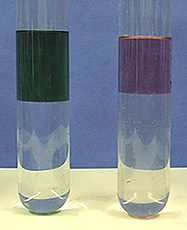
Description: Distilled water, tap water, and a solution of lead nitrate are extracted with a hexane solution containing dithizone. After shaking, the aqueous solution containing metal ions will have a red upper phase. The dependence of pH of the above reaction is shown by adding acid and base to the lead nitrate solution.
Source: Harris, Daniel C. Quantitative Analysis
Year: 1999 Vol: N/A Page: 646
Keywords: Extraction, pH, Solubility, Complexation, Indicators
Rating: 


Hazard: High
- Acute toxicity hazard
- Carcinogenicity hazard
- Reproductive toxicity hazard
- Aquatic toxicity hazard
- Hazardous to the Ozone layer
- Specific organ toxicity- liver, kidney, central nervous system, immune system
- Blood
- Aspiration hazard
- Skin irritation
- Eye irritation
- Flammable liquids
Effectiveness: Average
- Good connection from demo to course material
- Mild effects are seen by audience
- Time to results is medium
- Primary effects
- Effects are observable without guidance
Difficulty: Medium
- Procedures with some intermediate steps to results
- Sequential manipulations
- Use of scientific techniques
- Use of highly toxic reagents
Safety Precautions:
- Eye protection required
- Gloves required
- ABC fire extinguisher on hand
- Perform in a working hood or downdraft hood
- Perform on a chemically inert surface
- Prevent release of reagents to the environment
- Absorbent material on hand
- Avoid mists, droplets, and vapors
Class: Chromatography
Division: Analytical Chemistry
Return to Analytical Chemistry Demonstrations