Polymers- Phenol-Formaldehyde Polymer
Phenol-Formaldehyde Polymer
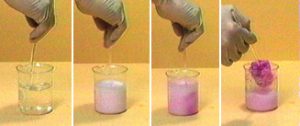
Description: A mixture of formaldehyde, phenol, and acetic acid is strongly acidified. In moments, the mixture turns pink and solidifies. This demonstration is usually performed in a hood.
Source: Shakhashiri, B.Z. Chemical Demonstrations: A Handbook for Teachers of Chemistry
Year: 1983 Vol: 1 Page: 219
Keywords: Polymers, Phenol, Formaldehyde, Plastics, Bakelite
Rating: 

Hazard: High
- Flammable liquids
- Acute toxicity – oral, respiratory, dermal
- Skin corrosion hazard
- Serious eye damage
- Skin sensitization
- Mutagenicity
- Carcinogenicity
- Short term aquatic hazard
- Corrosive to metals
- Specific organ toxicity – nervous system, kidney, skin
- Aquatic toxicity – short and long term
Effectiveness: Good
- Results are clearly observable without guidance
- Good connection from demo to course material
- Strong effects are seen by audience
- Time to results is low
- Good reliability
Difficulty: High
- Use of flammable and toxic reagents
- Sequential manipulations required
- Some intermediate steps to results
- Demos that require training or practice to perform correctly
- Timed or situational manipulations
Safety Precautions:
- Eye protection required
- Gloves required
- Face shield recommended
- Protective clothing recommended
- Downdraft hood required for indoor performance
- ABC fire extinguisher on hand
- Absorbent materials on hand
- Avoid inhalation or contact with reagents
- Prevent release of reagents to the environment
Class: Organic Chemistry
Division: General, Organic Chemistry
Return to Organic Chemistry Demonstrations