Acids and Bases- Buffer: Making an Acetate Buffer and Showing Its Behavior
Balloon Races – Ionization of Hydrochloric Acid and Acetic Acid
Coin-Operated Red, White, and Blue Fountain: Reaction of Nitric Acid and Copper
Conductivity and Extent of Dissociation of Acids and Bases
Fizzing Races: Ionization of HCl and Acetic Acid
Acid-Base Indicators Extracted from Plants
Acidic and Basic Properties of Oxides
Acid and Basic Properties of Salts
Acidity of Aluminum Chloride Solution
Amphoteric Properties of Aluminum Hydroxide
Classical Properties of Acids and Bases
Food is Acidic; Cleaners are Basic
Leeching Lead into Acidic Solution
Fizzing and Foaming: Reactions of Acids and Carbonates
Solubility of Copper Oxide in Water vs Acid
Buffer: Making an Acetate Buffer and Showing Its Behavior
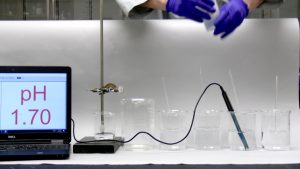
Description: An acetate buffer is made, and its properties for pH control are compared to that of water with a pH meter.
Source: UW Madison card catalog
Year: N/A Vol: N/A Page: N/A
Keywords: Acids and Bases, Buffer, Conjugate pairs, Bronsted Acid
Rating:
Hazards: Some
- Flammable liquids
- Skin corrosion
- Serious eye damage
- Corrosive to metals
- Specific target organ toxicity – single exposure – respiratory system
- Acute aquatic toxicity
- Electric shock hazard
- Use of electrical devices
- Mildly reactive substances in use
Effectiveness: Average
- Secondary observations
- Good connections to course material
- Mild effects are observed by audience
- Good reliability
Difficulty: Medium
- Some sequential manipulations
- Use of scientific material
- Procedures with some intermediate steps
Safety Precautions:
- Eye protection required
- Gloves required
- Use UL approved three-prong plug and outlet
- Prepare in a well-ventilated area
- Avoid exposure to mists or vapors
- ABC fire extinguisher on hand
- Absorbent material on hand
- Minimum observation distance is 0.5 meter
- Sodium bicarbonate on hand
Class: Buffer, Acids and Bases
Division: General
Return to General Chemistry Demonstrations