Acids and Bases- Classical Properties of Acids and Bases
Classical Properties of Acids and Bases
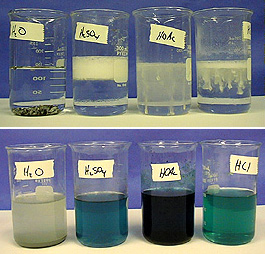
Description: Classic examples of properties of acids. Acids change the color of litmus, react with metals and copper carbonate, and are no longer active when reacted with base.
Source: Shakhashiri, B.Z. Chemical Demonstrations: A Handbook for Teachers of Chemistry
Year: 1989 Vol: 3 Page: 58
Keywords: Litmus paper, Acid and Base Properties, Neutralization, Disassociation
Rating: 

Hazard: Medium
- Skin corrosion hazard
- Corrosive to metals
- Acute toxicity hazard – oral, inhalation
- Serious eye damage
- Aquatic toxicity hazard
- Oxidizing solids
- Solids which when wet, produce flammable gases
- Specific organ toxicity – respiratory system
Effectiveness: Average
- Results are observable with guidance
- Mild effects are seen by audience
- Time to results is high
- Good connection from demo to course material
- Contrast between systems are noticeable
Difficulty: High
- Complex and extended lab equipment manipulations
- Use of toxic reagents
- Demo requires training or extended practice
- Multi-step procedures
Safety Precautions:
- Eye protection required
- Gloves required
- Absorbent materials on hand
- Sodium bicarbonate on hand
- Chemically resistant surface recommended
- Perform in a well-ventilated area
- ABC fire extinguisher on hand
- Prevent release of reagents to the environment
Class: Acids and Bases
Division: General
Home| General Chemistry Demos