Types of Organic Reactions- Organic Synthesis With Familiar Materials
Organic Synthesis with Familiar Materials
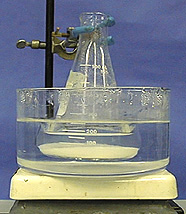 Description: Aspirin is converted to wintergreen in a one-step process that may then be passed around to students to smell.
Source: Journal of Chemical education Vol – 68
Year: 1991 Vol: 68 Page: 502
Keywords: Aspirin, Wintergreen, Synthesis, Sulfuric Acid, Esterification
Rating:


 Hazard: High
- Electric shock hazard
- Skin corrosion hazard
- Acute toxicity hazard – oral, inhalation, dermal
- Flammability hazard
- Burn/scald hazard
- Corrosive to metals
- Serious eye damage
- Specific organ toxicity – single exposure – eyes
- Reproductive toxicity
- Short term aquatic toxicity
- Results are observable only with guidance
- Mild to no effects are seen by audience
- Time to results is high
- Good connection from demo to course material
- Results are superficially engaging
- Sequential addition of reagents
- Procedures with some intermediate steps to results
- Reactions at non-standard conditions
- Demos in which samples are passed out to the audience
- Manipulations involving high temperature or reactivity
- UL approved three-prong plug and outlet
- Eye protection required
- High temperature gloves recommended
- Absorbent materials on hand
- Sodium bicarbonate on hand for neutralization
- ABC fire extinguisher on hand
- Avoid contact with droplets. mists and vapors
- Prevent release of reagents to the environment
Class: Organic Chemistry, Synthesis
Division: General, Organic Chemistry
Home| General Chemistry Demonstrations| Organic Chemistry Demonstrations